

The right tournament integration depends on the experience you want to own and the work your team is prepared to take on. A first campaign and a fully custom product can use different approaches.
Aura Sports Network offers three paths to discuss: a hosted branded experience, embedded tournament cards, and an API integration. Start with the player journey and the responsibilities behind it.
Hosted: start with a branded tournament experience
With the hosted approach, Aura Sports Network runs the tournament app with the agreed brand profile: logo, colors, and artwork. The partner focuses on the audience, event brief, promotions, and reward plan.
This is a useful starting point when a team wants to put a competition in front of its audience without building the tournament interface itself. It still requires implementation planning. Account experience, domains, support responsibilities, reporting access, and launch criteria should be agreed before release.
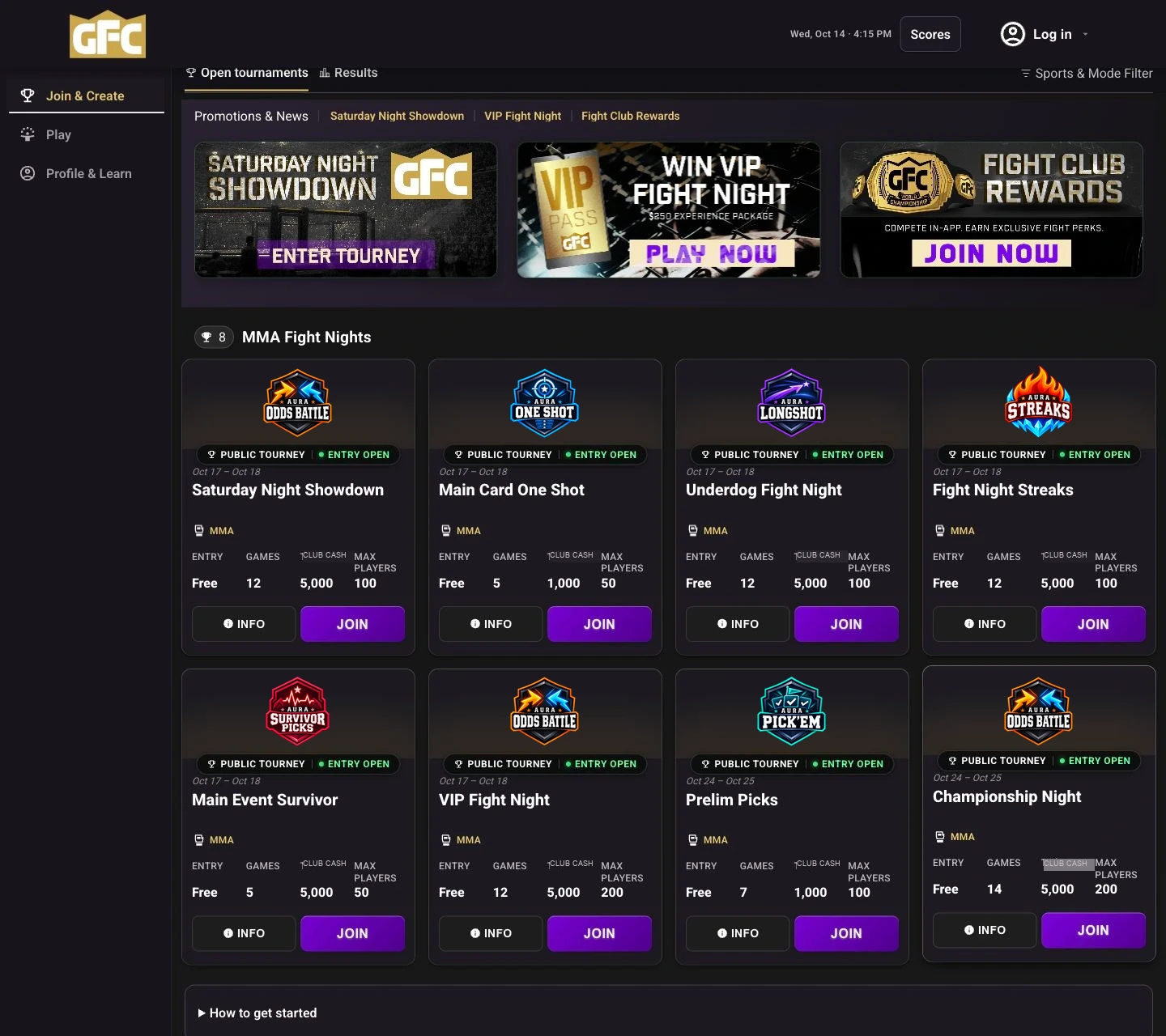
Embedded: bring tournament discovery onto your pages
Embedded tournament cards can place the competition alongside content your audience already visits. The cards introduce the tournament and lead players into the hosted app.
This approach fits teams that want a tournament presence on an existing site and are comfortable with that handoff. It should not be confused with embedding the entire gameplay application inside the page.
Plan the placement, theme, destination, and mobile behavior. A player arriving from an article or broadcast page should understand where the next step leads.
API: build the interface your product needs
The API approach gives a partner team responsibility for its own front end, using the same underlying API that supports Aura Sports Club.
That makes the integration conversation more detailed. Authentication, supported endpoints, data access, error handling, refresh behavior, and release compatibility need explicit decisions. Custom interface ownership also brings responsibility for accessibility, device testing, and the explanation of game states to players.
Contact our team for API documentation.
Assign responsibilities before choosing the architecture
For any approach, answer these questions together:
- Who owns the player account and sign-in experience?
- Who configures the tournament, rules, and schedule?
- Who supplies and approves promotional assets?
- What reporting does each team need, and who can access it?
- Who handles player support and reward fulfillment?
- What needs to be verified before the first invitation is sent?
Payment, wallet, or loyalty-system work should be scoped explicitly where required. A free-to-play event and a paid-entry product do not have identical integration requirements.
Match the first release to a concrete use case
Imagine a sports publisher planning a recurring reader competition. It might begin with branded hosted tournaments, introduce cards alongside editorial coverage, and consider a custom interface when there is a clear reason to own more of the experience.
That is an illustrative path, not a required progression. Some teams may stay hosted. Others may need a custom interface from the outset. The decision should follow the product requirements and available resources.
Bring the first tournament brief to the integration discussion: audience, sports, format, timing, identity, and evaluation criteria. It is easier to make useful technical decisions around a concrete event.
Discuss your integration with Aura Sports Network. For the earlier planning steps, see designing a branded tournament and measuring engagement.